
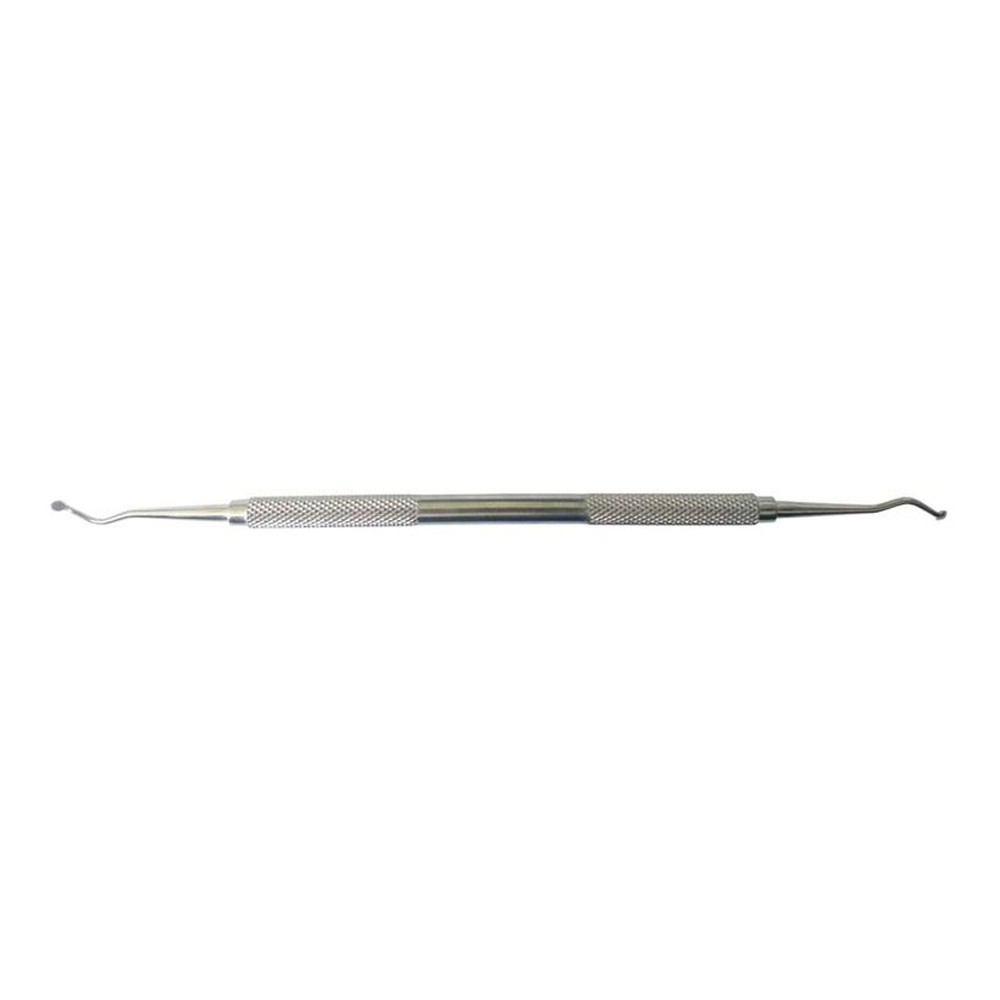
Scalers and curettes are dental instruments used for removing plaque, calculus (tartar), and debris from the teeth and gums during dental cleanings and periodontal procedures. While they serve similar purposes, there are some differences between scalers and curettes:
Scalers:
Scalers have sharp, pointed tips and are primarily used to remove heavy deposits of calculus from the tooth surfaces.
They are effective for removing larger, tenacious deposits of calculus, especially on the crowns of the teeth and along the gumline.
Scalers may have different shapes and designs, including sickle scalers and universal scalers, each suited for specific areas of the mouth or types of deposits.
Sickle scalers typically have a curved, pointed tip that allows for efficient removal of calculus on the facial and lingual surfaces of the teeth.
Universal scalers have a more curved blade and are versatile instruments suitable for use on various tooth surfaces.
Curettes:
Curettes have rounded tips and are used for both scaling and root planing procedures.
They are designed to remove smaller deposits of calculus and plaque as well as to smooth the root surfaces of the teeth to promote healing and reduce inflammation.
Curettes have a curved blade with a rounded tip and two cutting edges, allowing for efficient removal of deposits from root surfaces and pocket walls.
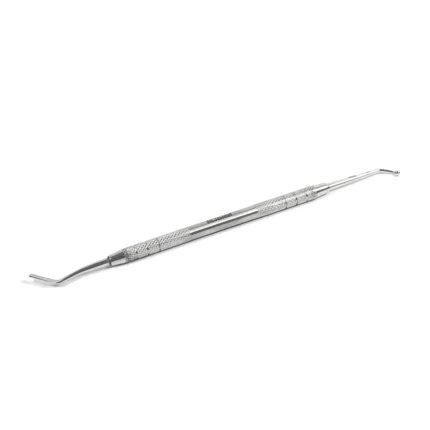
Gracey curettes are a common type of curette with a specific design that allows access to different areas of the tooth root and pocket depths, making them suitable for subgingival scaling and root planing.
Reviews
There are no reviews yet.